
How an HR budget will save you money this year
Most businesses say they don’t have an HR budget.
What they usually mean is that they don’t have a planned one.
In reality, most businesses are already spending money on HR. They just don’t think of it that way.
HR costs tend to show up reactively. A grievance that needs handling. An investigation that takes up management time. External advice brought in once something has already escalated.
By the time these costs become visible, they’re often higher than expected and harder to control.
What we’re seeing more of is business owners stepping back and asking a simple question:
“What has HR actually cost us over the last year?”
When you add up things like grievances, disciplinaries, management time, sickness linked to unresolved issues and recruitment after avoidable exits, you’d be surprised how it mounts up.
If you haven’t already, set aside 30 minutes this month to add up what HR has really cost your business. Most businesses have never done that and it’s usually an eye-opener.
For many businesses, redirecting a small part of that reactive spend into more proactive HR support is enough to reduce risk, save money and give managers more confidence day to day.
If you’d like help with reviewing your current HR spend or planning a more proactive HR budget, we can help you to talk it through and sense check the numbers.
And if you’d like the full detail, including how to spot hidden HR costs and understand what proactive HR support looks like in practice, get in touch for a copy of our latest guide on creating an HR budget.

Why Low‑Cost Benefits Like Health Cash Plans Make a High‑Value Difference
At a time when recruitment is competitive and retention is high on every employer’s agenda, it’s easy to assume that only big, high‑cost benefits make an impact. In reality, some of the most valued employee benefits are surprisingly affordable—and incredibly effective at supporting wellbeing, boosting engagement, and helping organisations stand out in a crowded market.
This month, we’re spotlighting one of the simplest and most budget‑friendly options available to employers: health cash plans. These plans offer practical day‑to‑day support for employees, encourage proactive health behaviours, and deliver meaningful value without stretching your benefits budget.
What is a Cash Plan?
A health cash plan is a practical, cost-effective employee benefit that supports the everyday health needs of your workforce. Such a policy will provide employees with annual allowances for the more everyday health expenses, such as routine dental & optical costs, therapies, consultations, diagnostics and more. As standard, these plans will also tend to include access to a Virtual GP, counselling sessions & an Employee Assistance Programme (EAP).
How it works?
- Book a healthcare appointment
- Attend and pay for your treatment
- Claim on your cash plan – most providers have an easy-to-use app
- Receive your money back within a few days
How much does a cash plan cost?
Policies start as low as £6 per employee per month. Within each policy there are different levels of cover to choose from and employees can include their families – children are also free with most providers!
Why provide your employees with a cash plan as part of their employee benefits package?
A cash plan allows an employer to stand apart for their competitors and provide their team with a benefit that makes them feel valued and keeps their health a priority. Reducing the financial burden of healthcare can enhance employee morale and job satisfaction and lead to better retention rates. A cash plan means employees are encouraged to seek preventive treatments, reducing the risk of serious health issues keeping employees healthy and at work. This also provides a tick in the box for employers who have a duty to provide things such as annual eye tests for workers operating display screen equipment.
Interested in finding our more? Get in contact at info@gfhr.co.uk

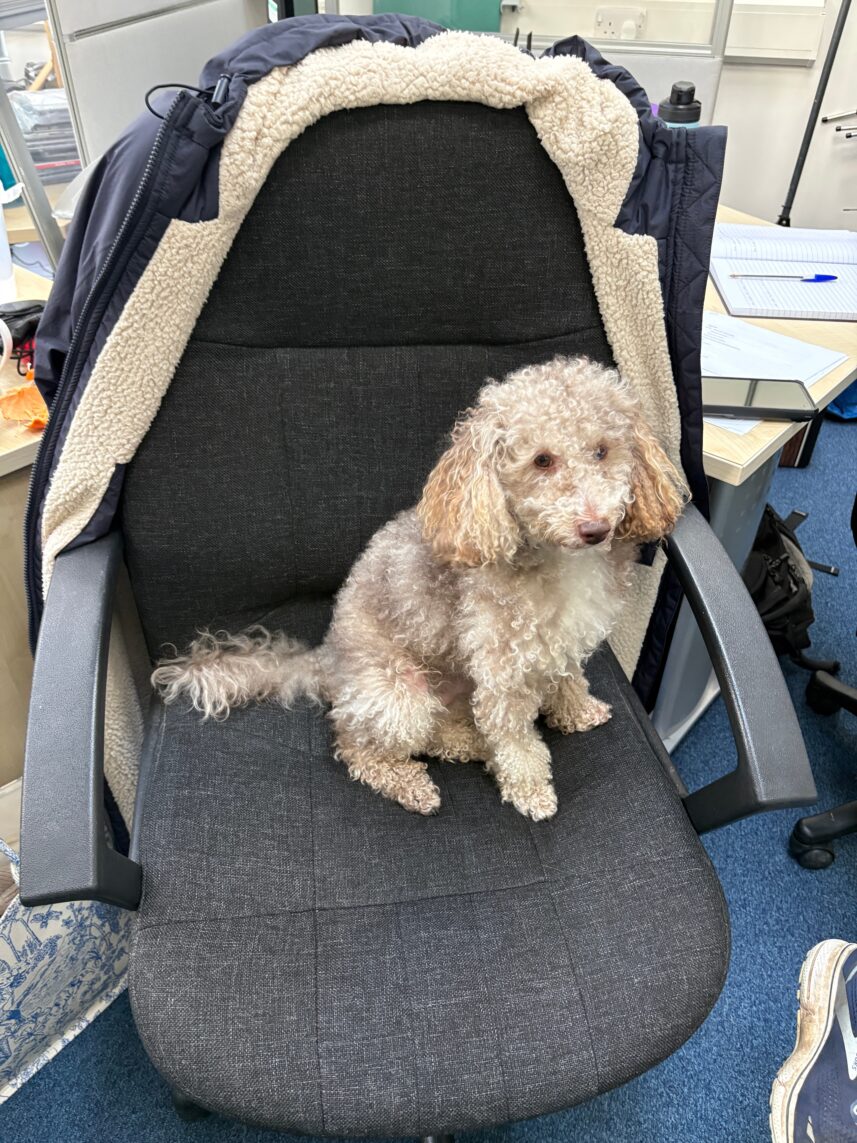
Gemma spent last Wednesday delivering some training and facilitating a client Strategy Away Day, with some extra special guests 🐾
By the end of the day the team had created a set of clear “how we will work” commitments, designed to support performance while also protecting themselves and their colleagues from added stress as they head into a busy period.
Our associate Hazel also delivered Diversity, Equality and Inclusion training last week. Focusing on unconscious bias and how we can respond when someone is being inappropriate; the delegates came away with a greater understanding of what they can personally do to create safe inclusive environments.
Dates for your Diary
Friday 6 March — Employee Appreciation Day
Observed on the first Friday in March, this day is a great opportunity for employers to recognise and thank their teams. Even small gestures—like a handwritten note, a team breakfast, or a simple “thank you”—go a long way in boosting morale and strengthening engagement.
Saturday 8 March — International Women’s Day 2026
This global day celebrates women’s achievements, highlights ongoing challenges, and shines a spotlight on women’s rights. It’s also a meaningful moment for organisations to reflect on gender equity, representation, and inclusive practices. The theme this year is ‘Give to Gain’ and more information can be found here.
Here are some of the events we already have lined up for 2026:
Wednesday, 11th March 2026 – West Kent Expo ‘26
After the success of Expo ‘25, we are looking forward to exhibiting at West Kent Expo ‘26. This is a fantastic event based in Tonbridge bringing together local businesses, entrepreneurs, and industry professionals for a day of networking, inspiration, and opportunity. Find out more here.
Thursday, 26th March 2026 – Client Quarterly webinar on Health Cash Plans
Later this month we are teaming up with Benefits Broker BDHL to provide an overview on Health Cash Back Plans and how they can be an affordable yet highly valued employee benefit for attracting and retaining top talent. All clients will be invited to attend, if you are not yet a client but would like to find out more, get in contact at info@gfhr.co.uk.
Thursday, 30th April 2026 – Preventing Burnout Workshop
We’re delighted to bring back our Burnout Management Workshop, led by Gemma and Burnout Coach Matt Adamson. This session is designed to help leaders and teams recognise the early signs of burnout—before it affects wellbeing or performance. You’ll walk away with:
- practical strategies to protect your own resilience
- simple tools for spotting burnout risks across your team
- clear guidance on creating healthier working practices
- approaches to maintaining performance without compromising people
If you’re committed to building a sustainable culture—not just a productive one—this workshop is a great place to start. Early bird tickets are available now.
What one company did to tackle loneliness at work and why it worked
A Swedish company has trialled a “friendship hour”, giving employees paid time to socialise, with staff reporting that they felt happier and less isolated.
The initiative was introduced to tackle workplace loneliness, particularly during the darker winter months when wellbeing often dips. The trial shows that simple, human-focused interventions can have a real impact.
Food for thought: wellbeing doesn’t always need formal programmes, sometimes creating space for connection is enough.

Government-backed training highlights the role managers play in preventing long-term sickness
Earlier this year, the government funded free occupational health training to 5,000 line managers in small businesses, aimed at helping them to spot early signs that someone might be struggling, such as ongoing fatigue, changes in behaviour or rising absence.
With long-term sickness now affecting millions of workers and costing businesses thousands per employee, the initiative highlights a familiar pattern: absence problems often get worse because conversations happen too late or managers don’t feel confident starting them.
While the results of this initiative are yet to be announced, the message will feel familiar to many business owners. Absence management works best when issues are picked up early, conversations happen sooner rather than later and managers know when to step in before a situation becomes long-term or costly.
What to do when an employee is arrested
Learning that an employee has been arrested can feel alarming, but acting too quickly can create unnecessary risk. An arrest is not the same as a charge or a conviction and many cases go no further.
The key is proportionality: understand where things are in the legal process, consider whether it’s relevant to the role and respond calmly with the right policies and conversations in place.

Can I ask staff to share their work location if they are working remotely?
Yes, as long as there’s a clear business reason. For example, health and safety, data security or knowing where people are working for operational reasons. Be clear about why you’re asking and avoid collecting more information than you actually need.
What should I do if an employee refuses to complete mandatory training?
Start by understanding why they’re refusing. If the training is genuinely mandatory for the role (for safety, legal or operational reasons), make that clear and give them a reasonable opportunity to complete it. If they still refuse, it may become a conduct or performance issue that needs to be managed formally.
Can I tell staff they cannot bring their personal phone on to the shop floor or job site?
Yes. You can set reasonable rules around personal phones at work, especially for safety, security or productivity reasons. Make sure the rule is clear, applied consistently and allows for exceptions where appropriate, such as emergencies.
