
Are you ready for the new trade union access rules?
If you’ve never had to deal with a trade union, the new access rules could change that.
Workplace access rules are expected to come into force on 30 October 2026, subject to parliamentary approval. They would allow trade unions to request physical or digital access to workplaces to meet, recruit and organise workers.
A union does not need to have existing members in your workplace to make a request. If you have 21 or more workers across your business and you cannot agree access terms, the Central Arbitration Committee (CAC) could impose them.
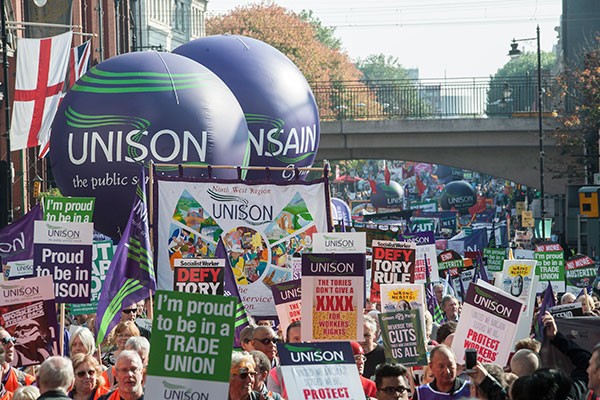
Under the proposed process, you would have 15 working days to respond to a formal request, followed by 25 working days to negotiate. Repeated breaches of a statutory access agreement could lead to penalties of up to £500,000.
Another key proposed change has now been pushed back to 1 January 2027 when it’s expected thatemployers will be required to give workers a written statement about their right to join a trade union. More details on this will follow over the coming months.
In the meantime, there are a few things worth doing now.
Decide who would handle a Trade Union access request and how they’d keep track of the deadlines. Make sure your managers know where to direct any approach from a union.
If you’d like help preparing your documents and procedures, get in touch and we can talk it through.
At the time of writing (28 September 2026), the workplace access rules still require parliamentary approval. Contact us for the latest position.

What we’ve been up to
Over the last month, we held another of our Employment Rights Act update sessions, helping employers understand the changes that are coming and what practical steps they should be taking now. Whilst we do not currently have any further update sessions scheduled, there are still some big legal changes on the horizon.
One of the biggest changes is around unfair dismissal rights when from January 2027, employees with just six months service will get protection from ordinary unfair dismissal. This protection currently kicks in after two years’ employment, so this marks a huge change.
If you have any performance concerns’ around staff with less than two years’ service, now is the time to be managing this, we strongly recommend that you do not wait until January.
If you need some help with under performers or in understanding the upcoming legal changes and what they mean for your business, do get in contact.
Finally, on a lighter note, Gemma enjoyed attending the Tunbridge Wells Business Awards Sponsors drinks last month, This was a fantastic evening and we can’t wait for the list of businesses shortlisted for awards to be published and of course to attend the event itself on the 10th November.



Dates for your Diary
8 October – Town Hall Tunbridge Wells Business Expo
We’ll be exhibiting at the Town Hall Expo this Thursday. It’s always a well-attended event with plenty of opportunities to network, share ideas and discover what’s happening across the local business community. Entry is free for visitors, so do swing by and say hello.
10 October – World Mental Health Day
World Mental Health Day provides a valuable opportunity for employers to focus on employee wellbeing. Whether it’s reminding employees about available support, encouraging conversations around mental health, reviewing workloads or simply checking in with your team, small actions can make a meaningful difference to wellbeing, engagement and productivity.
18 October – World Menopause Day
This is a good opportunity for organisations to consider whether they are doing enough to support employees experiencing menopause symptoms. Employers may wish to review whether they have a menopause policy in place, whether managers have received appropriate training and whether workplace adjustments and support mechanisms are readily available where needed.
5 November – Tunbridge Wells Business Show
We are excited to be exhibiting at this show again which is taking place at the Assembly Hall Theatre in Tunbridge Wells. There is already a fantastic line up of exhibitors and speakers attending the event. Find out more here.
10 November – Tunbridge Wells Business Awards
We are looking forward to attending this year’s awards ceremony and celebrating the incredible achievements of businesses across our local community.
Acas survey reveals which ERA changes employers are finding the hardest
A new Acas/YouGov survey of over 1,000 employers has found that day-one statutory sick pay (30%), day-one paternity leave (27%) and the reduced unfair dismissal qualifying period (23%) are the Employment Rights Act changes that businesses expect to find the hardest to adopt.
Flexible working and trade union recognition were close behind at 21% each.
The survey was conducted in late April and early May 2026, which means that many of these changes were already in force when employers said that they were still struggling with them.
Acas has updated its guidance on probation periods and unfair dismissal to reflect the new rules. If you haven’t reviewed your processes against that guidance yet, now is the time.
Employee dismissed over Facebook posts wins unfair dismissal claim
A warehouse worker who posted the details of a workplace grievance on Facebook was dismissed for gross misconduct. A tribunal found that the dismissal was unfair.
Why? The employer (DHL) hadn’t sent the employee a copy of its social media policy, hadn’t given him any guidance on online conduct and hadn’t even asked him to take the post down before moving to dismiss. There was also little evidence that the posts had caused any real harm to the business.
The tribunal ordered reinstatement.
There’s a straightforward lesson here for business owners. If you have a social media policy, make sure that your staff have actually received it. And, if an employee does something you don’t like online, the first step is a conversation, not a dismissal letter.
The government’s Keep Britain Working review and what it means for employers
The government’s Keep Britain Working review is developing a new employer-facing standard for managing workplace health, sickness absence and disability inclusion. For small businesses, this signals a clear direction of travel: the government expects employers to play a bigger, more structured role in managing health at work.
The numbers behind it are sobering. 2.8 million people are currently economically inactive due to health conditions. Sickness absence is at a 15-year high. And employers lose an estimated £120 per day for every employee off sick.
The review found that 93% of fit notes are marked “not fit for work” and is exploring replacing the current system with collaborative stay-in-work and return-to-work plans involving employers, employees and health providers. Fit note reform pilots launched in May 2026 and a draft employer standard is expected by the end of the year.
Getting your absence management processes in order now puts you ahead of where this is going.
The tribunal time limit has doubled

From 1 October 2026, the time limit for most employment tribunal claims doubles from three to six months.
The three-month window that existed before worked in employers’ favour. Three months passes quickly and often employees simply ran out of time to lodge a complaint.
With the new change, employees have more time to reflect, take advice and build a stronger case. And, with the Acas early conciliation period already extended to 12 weeks, a workplace dispute could stay live for the best part of nine months before you even see a claim.
The new limit applies to any dismissal or workplace incident on or after 1 October 2026. Anything before that date still falls under the old three-month rule.
Every conversation you don’t document, every process you cut short and every dismissal you handle loosely now carries risk for twice as long. If your processes and documentation aren’t where they need to be, now is the time to tighten things up.
If you’d like help with reviewing how you handle dismissals and workplace issues so you’re not exposed by the rule change, reach out and we’ll be happy to walk you through things.

Do I have to tell my employees they can join a trade union?
Yes, you will need to, but this has now been pushed back until 1 January 2027. At which point, every employer will be required to give workers a written statement informing them of their right to join a trade union.
New starters must receive it alongside their statement of employment particulars. Existing workers must receive it, or be told where they can access it, by 5 April 2027.
The government plans to publish the standardised statement and final guidance before the duty begins, so check those requirements before updating your documents.
An employee left 5 months ago. Can they still take me to tribunal?
It depends on when they left.
If their employment ended on or after 1 October 2026, the time limit for most tribunal claims is six months, so yes, they could still be within the deadline. If they left before that date, the old three-month limit applies and they would likely be out of time.
The clock can also be paused during Acas early conciliation, which can add up to 12 weeks.
What are my obligations if an employee asks for adjustments because of menopause symptoms?
Menopause isn’t a standalone protected characteristic under the Equality Act, but symptoms can amount to a disability if they have a substantial and long-term effect on day-to-day activities.
If they do, you have a duty to make reasonable adjustments. Even where symptoms don’t meet that threshold, handling requests dismissively could lead to claims under sex or age discrimination.
Take the conversation seriously and explore what adjustments are practical.
